
When it comes to How Do I Choose the Right Furnace for My Home or Business?, heating capacity, AFUE efficiency rating, fuel source, and comfort features like variable-speed blowers rank as top priorities, according to industry guidance from Carrier. Homeowners in Point Pleasant and Monmouth and Ocean Counties should also weigh brand reliability, warranty coverage, and long-term energy savings. CAM HVAC Services provides warranties; contact the brand directly for specific details.
What Does Choosing a Furnace Involve?
Choosing a furnace is a significant purchase that demands careful research and planning. Homeowners considering this investment must evaluate performance data, efficiency ratings, and system requirements before committing to a new unit. A furnace acts as the central engine of a home’s heating system, responsible for pumping air from the intake, through the ducts, and into every room.
When Should a Homeowner Consider Furnace Replacement?
A homeowner typically decides to replace a furnace when repair costs become too high or the system fails altogether. A single expensive repair bill can make a new furnace more cost-effective than continuing to pay for fixes. CAM HVAC Services provides professional furnace services to keep homes warm and comfortable throughout the winter.
What Steps Are Involved in the Selection Process?
The selection process follows a logical sequence:
- Assess the current system’s condition — note whether the furnace has failed completely or is requiring costly repairs that exceed half the replacement price.
- Determine heating capacity requirements — a professional must calculate the correct size based on the home’s square footage, insulation levels, and ductwork layout.
- Review fuel source options — natural gas, propane, oil, and electric furnaces each carry different installation costs and operating expenses.
- Evaluate efficiency ratings — higher Annual Fuel Utilization Efficiency (AFUE) percentages reduce energy consumption over the system’s lifespan.
- Confirm installation costs — these vary based on the home’s existing setup and whether ductwork modifications are needed.
CAM HVAC Services has extensive experience helping clients navigate these choices. The family-owned company ensures customers receive clear guidance on equipment warranties and system compatibility before making a final decision.
What Size Furnace Do You Need?
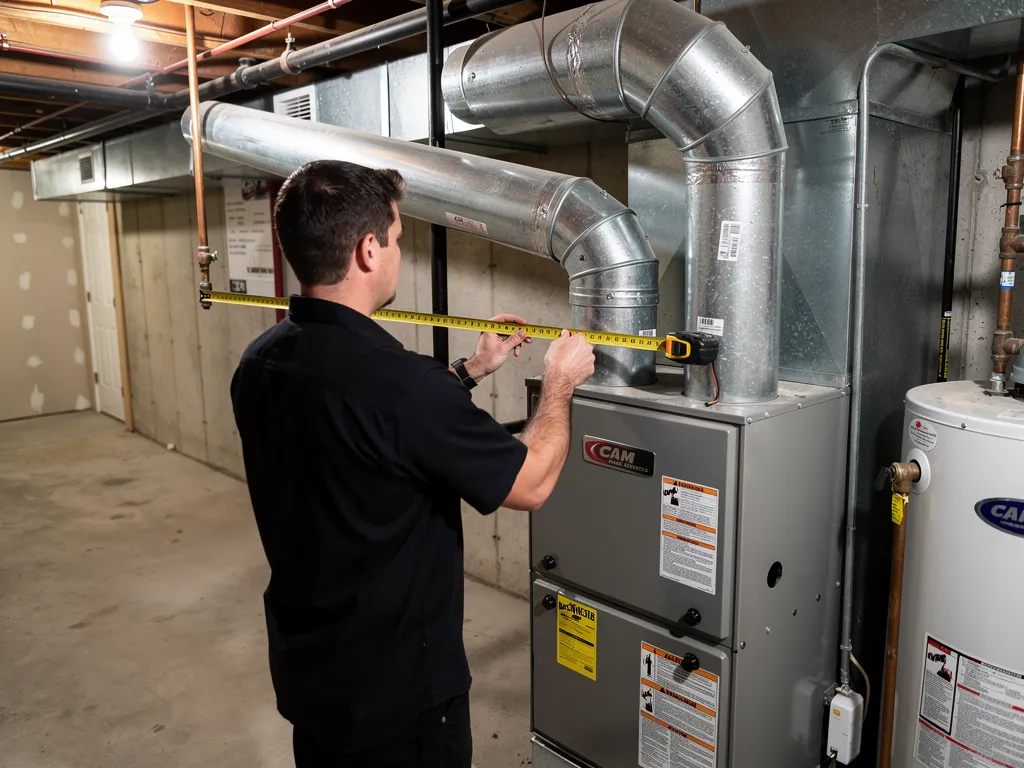
Furnace sizing has nothing to do with physical dimensions. A furnace’s size refers to its heating output, measured in BTUs (British Thermal Units). The amount of heat the unit can produce per hour. Homes do not need the same output, and guessing this number leads to real problems.
An undersized furnace runs constantly, struggling to reach the set temperature. An oversized unit short-cycles, turning on and off frequently, which wastes energy and stresses components. Both scenarios shorten equipment lifespan and raise monthly bills. The honest answer: determining the correct size is impossible until an HVAC professional inspects the home.
Why Can’t Homeowners Calculate Furnace Size Alone?
Load calculations depend on factors invisible from the curb. A professional measures square footage, ceiling height, window count and type, insulation levels, and even the home’s orientation to the sun. Each variable changes the BTU requirement. Skilled technicians with over 56 years of combined experience perform these calculations accurately for homes and businesses across Point Pleasant, NJ, and Monmouth and Ocean Counties.
What Happens With the Wrong Size Furnace?
The consequences extend beyond discomfort:
- Oversized furnace — short cycling increases wear, raises energy consumption, and creates uneven heating between rooms
- Undersized furnace — continuous operation drives up utility costs and leaves cold spots throughout the building
- Both scenarios — premature breakdowns occur at the worst possible times, often during the coldest nights
A properly sized furnace operates reliably, keeps energy consumption lower, and prevents unexpected failures. The inspection process takes the guesswork out of the equation. Clients who skip this step risk paying for a system that never performs as intended.
Which Fuel Type and Efficiency Rating?
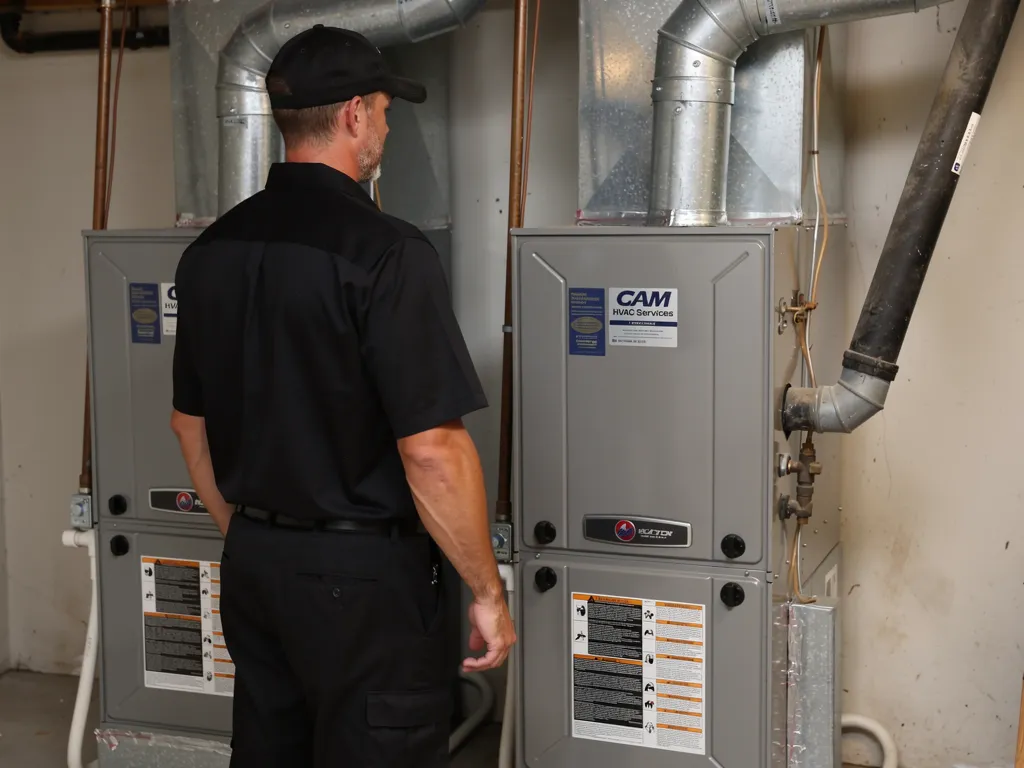
Fuel type and efficiency rating determine both the upfront cost and the long-term operating expense of a new furnace. The most critical factors when buying a furnace include heating capacity, AFUE efficiency rating, and fuel source. Homeowners and business owners in Point Pleasant, NJ, must weigh these three elements together before committing to a purchase.
Natural gas furnaces are generally more economical and widely used than electric or propane alternatives. This makes gas the default choice for most residential and commercial properties across Monmouth and Ocean Counties. Electric furnaces, by contrast, can be expensive to operate compared to other fuel sources, especially during prolonged cold snaps.
Which AFUE Rating Should a Buyer Target?
AFUE, or Annual Fuel Utilization Efficiency, measures how much fuel converts into heat. A higher rating means lower monthly bills and reduced energy waste. Buyers should prioritize the highest efficiency rating the budget allows, since the difference compounds over the furnace’s lifespan.
How Does Fuel Choice Affect Installation?
The existing infrastructure on a property often dictates the fuel type. Homes already connected to a natural gas line face a simpler installation than those requiring new service. Properties relying on electric resistance heat may find a high-efficiency gas furnace a major upgrade. The conversion requires professional assessment.
CAM HVAC Services installs and services high-quality equipment from renowned brands such as Trane and RUUD. A qualified technician can evaluate the property’s current setup and recommend the most cost-effective fuel and efficiency combination.
| Fuel Type | Operating Cost | Common Usage |
|---|---|---|
| Natural Gas | Lower | Most common |
| Electric | Higher | Limited |
| Propane | Moderate | Rural areas |
Choosing the right fuel and efficiency rating protects against wasted energy spending for years. A professional evaluation ensures the decision matches both the building’s needs and the local climate.
What Comfort Features Should You Prioritize?
Comfort features like variable-speed blowers and multi-stage heating technology directly improve how evenly and quietly a furnace heats a home. These advanced options prevent the temperature swings common with single-speed systems. A variable-speed blower adjusts airflow to match heating demand, eliminating the blast of hot air followed by a cold draft. Multi-stage heating fires the burner at partial capacity on milder days, saving energy and maintaining steadier warmth.
How Do Variable-Speed Blowers Improve Comfort?
Variable-speed blowers ramp up and down gradually rather than cycling on and off at full power. This reduces noise and keeps air moving continuously, which prevents cold spots near windows or exterior walls. Homes with open floor plans benefit most, as the consistent airflow reaches farther into the space.
What Role Does Multi-Stage Heating Play?
Multi-stage heating uses two or more burner settings instead of a single full-power burn. On a 40°F day, the furnace runs on low stage, consuming less fuel and producing gentler heat. On a 10°F night, it switches to high stage for maximum output. This staged approach cuts energy waste and extends equipment life by reducing thermal stress on the heat exchanger.
Balancing upfront budget with long-term energy savings ensures a wise investment in a heating system. CAM HVAC Services provides comprehensive inspections and cleaning to ensure a furnace operates reliably and efficiently. The company backs its installations with 10-year equipment warranties and 1-year labor warranties for added peace of mind. Clients in Point Pleasant, NJ, and Monmouth and Ocean Counties receive professional guidance on which comfort features match their home’s layout and heating load.
How Do You Avoid Common Installation Mistakes?
Skipping professional installation creates the single greatest risk of improper furnace sizing and reduced system performance. Homeowners and commercial property managers in Point Pleasant, NJ, and Monmouth/Ocean Counties face this mistake most often when rushing a replacement during a cold-weather breakdown. A furnace that is too large short-cycles and wastes energy. An undersized unit runs constantly without reaching the set temperature.
What Happens When Installation Is Rushed?
Rushed installation frequently overlooks critical ductwork sealing and airflow balancing. These oversights force the new furnace to work harder, increasing energy bills and shortening equipment lifespan. CAM HVAC Services recognizes that furnace maintenance and repair are essential for peak performance and optimal safety during colder months. Professional technicians perform comprehensive inspections, cleaning, and repairs to ensure the system operates reliably and efficiently from day one.
How Can Property Owners Protect Their Investment?
Property owners protect their investment by choosing a provider that offers same-day estimates. Flexible payment plans to simplify the replacement process. This approach removes the financial pressure that often leads to hasty, poor installation decisions. CAM HVAC Services provides 24-hour emergency furnace repair to prevent prolonged discomfort during breakdowns, ensuring that a rushed decision never compromises long-term performance.
Three steps to avoid common installation mistakes:
- Schedule a professional load calculation before purchasing any equipment — this determines the correct furnace size for the specific building.
- Verify that the contractor seals all duct connections and tests airflow after installation.
- Request a written warranty that covers both equipment and labor, protecting against installation errors that surface months later.
Professional installation eliminates guesswork and delivers a system that performs as designed for years.
FAQ
What factors matter most when selecting a furnace?
Heating capacity, AFUE efficiency rating, fuel source, and comfort features like variable-speed blowers rank as top priorities. Homeowners should also weigh brand reliability, warranty coverage, and long-term energy savings when making this decision.
When should a homeowner replace their furnace instead of repairing it?
A homeowner typically replaces a furnace when repair costs become too high or the system fails altogether. A single expensive repair bill often makes a new furnace more cost-effective than continuing to pay for fixes.
Why can’t a homeowner determine the correct furnace size alone?
Furnace size refers to heating output in BTUs, not physical dimensions, and load calculations depend on factors invisible from the curb. A professional must measure square footage, insulation, ductwork, and other variables to calculate the correct size.
Conclusion
In closing, selecting the right furnace requires careful consideration of efficiency ratings, sizing, fuel type, and long-term reliability—decisions that directly impact your home’s comfort and energy costs. At CAM HVAC Services, our licensed technicians guide you through each factor with expertise built on over 56 years of combined experience. We stand behind our installations with comprehensive warranties. Deliver the quality workmanship your family deserves, ensuring your heating system keeps you warm and comfortable for years to come.